CIPET / Internal study
The test results.
Every number sourced.
Agropak publishes only numbers that reference a specific test report. This page documents the testing that has been completed, what was measured, and what is still in progress. We do not present assessments in progress as completed results.
Every performance claim on this site has a source document. If we can't show a report number, we don't make the claim. If testing is in progress, we say so. That's the standard we hold ourselves to.
Agropak testing policy — Payal Patel, Founder
Mechanical Testing
CIPET, Bengaluru
Compression strength and drop resistance tests were conducted at CIPET (Central Institute of Petrochemicals Engineering & Technology), Bengaluru. May 2026.
Compression Testing
| Parameter | Result |
|---|---|
| Maximum compression force at failure | 15,492 N |
| Test specimen | Agropak 50ml bio-composite jar |
| Test type | Axial compression (vertical loading) |
| Standard applied | As per CIPET methodology |
| Test date | May 2026 |
| Lab location | CIPET, Bengaluru |
Drop Resistance Testing
| Parameter | Result |
|---|---|
| Drop height | 0.8 m |
| Drop surface | Concrete |
| Result | Passed |
| Observation | No cracking or content loss observed |
| Test date | May 2026 |
Test Report
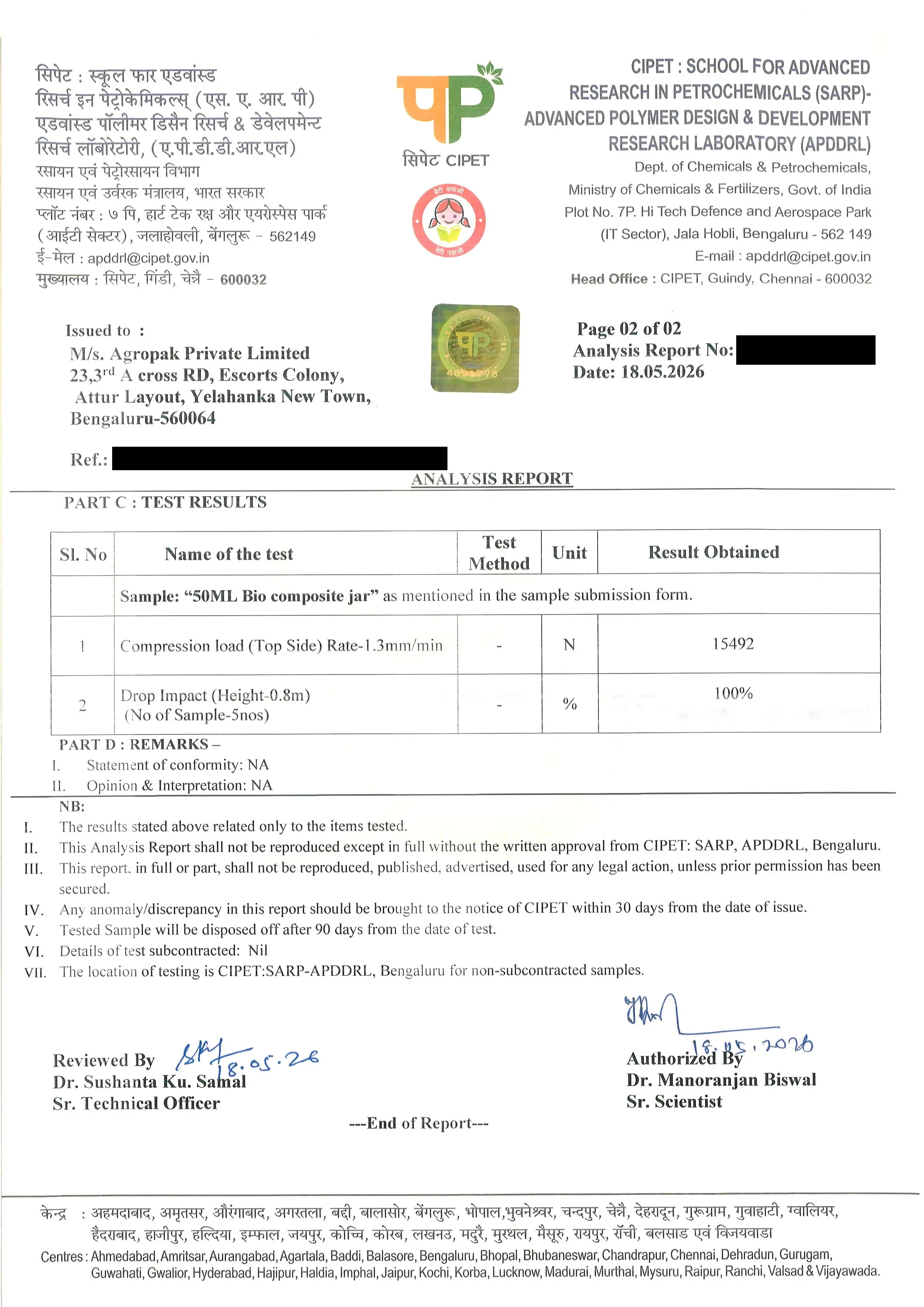
CIPET APDDRL — Test Results, Bengaluru, May 2026
Bio-Based Verification
TÜV SÜD
Bio-based carbon content was tested by TÜV SÜD in Frankfurt using ASTM D6866, the radiocarbon isotope analysis standard for bio-based content determination. May 2026.
| Parameter | Result |
|---|---|
| Bio-based carbon content | 93% |
| Test standard | ASTM D6866 (radiocarbon isotope analysis) |
| Test principle | Carbon-14 / Carbon-12 ratio measurement distinguishing plant-derived from fossil-derived carbon |
| Test duration | 10 hours |
| Testing body | TÜV SÜD, Frankfurt, Germany |
| Test date | May 2026 |
| Note on remaining 7% | Attributable to barrier coating and processing components |

Test Report
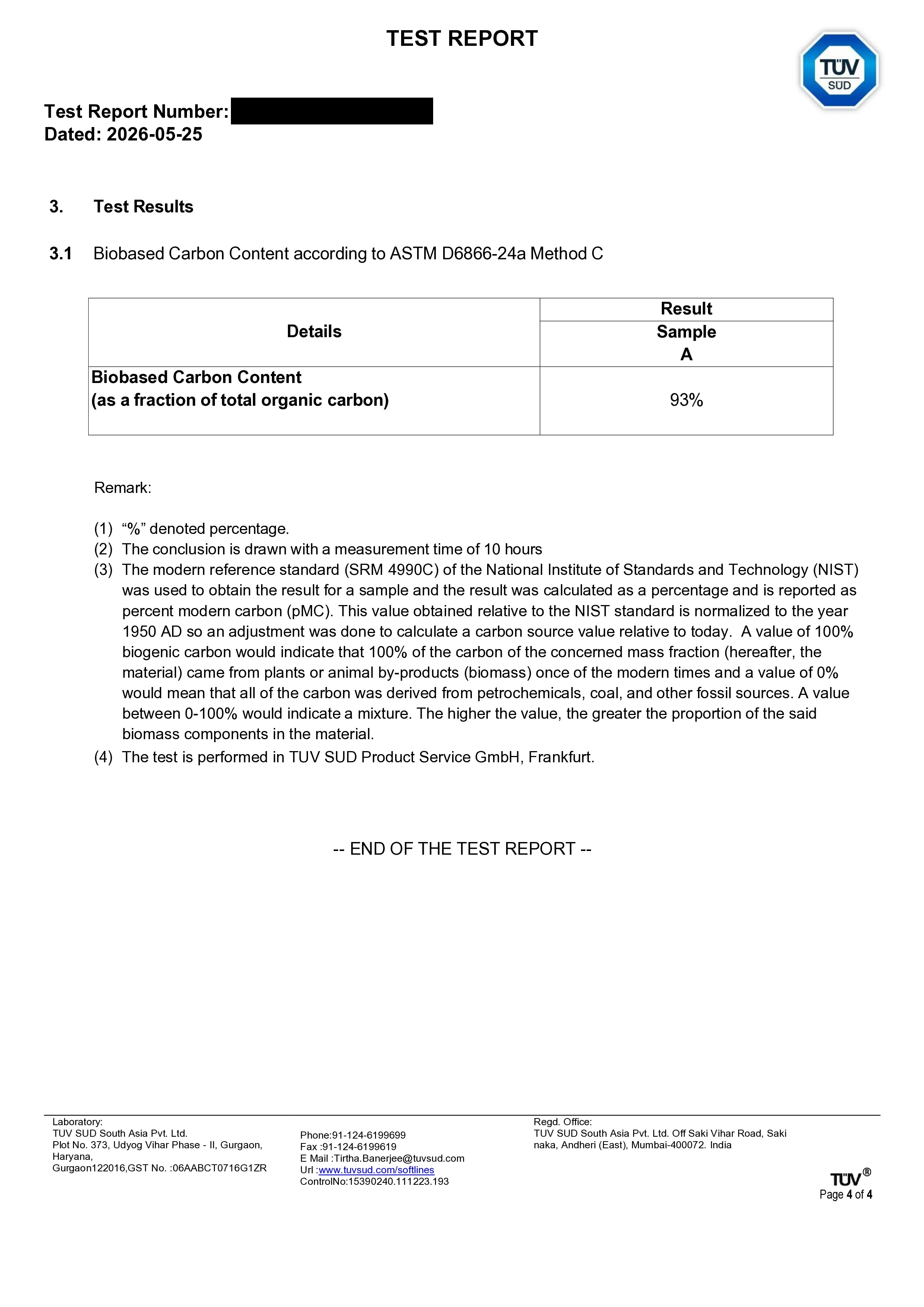
TÜV SÜD — Bio-Based Content (ASTM D6866), Frankfurt, May 2026
Formulation Compatibility
Internal formulation compatibility study.
Before making the jar available for brand evaluation, Agropak conducted an internal study placing a range of cream formulations in the jar and assessing them over an extended period. This is an internal study — independent formulation compatibility certification is listed below under assessments in progress.
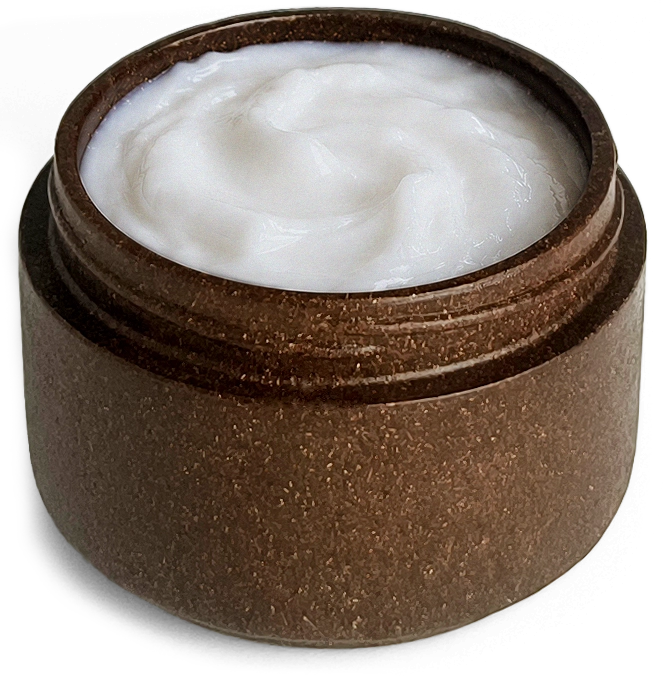
Face Cream
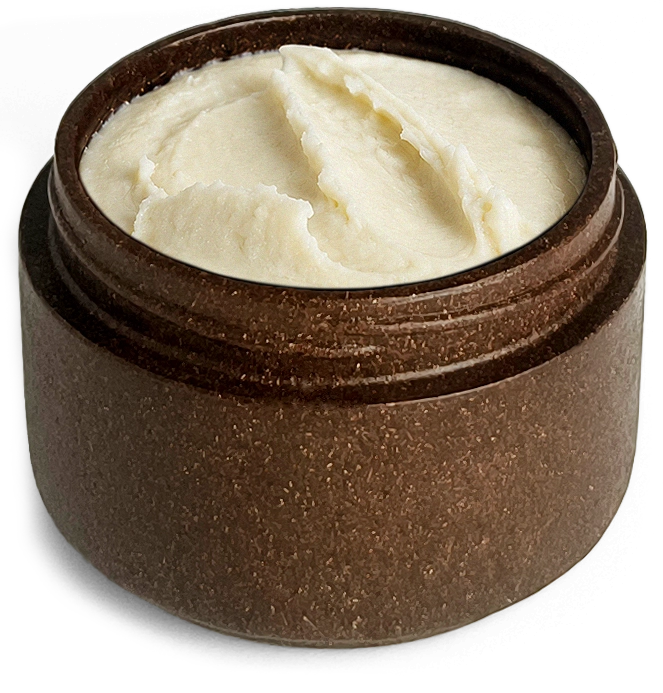
Body Butter
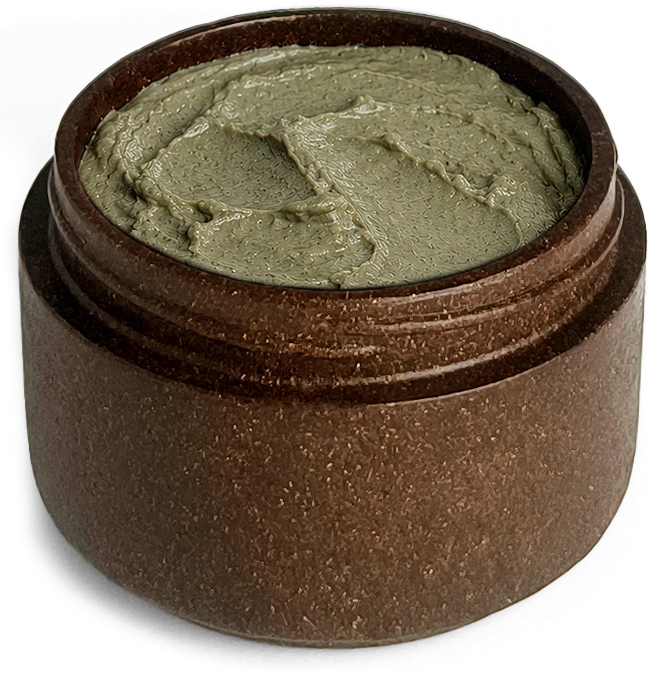
Clay Mask
Study parameters
| Parameter | Value |
|---|---|
| Assessment criteria | Color, viscosity, odor, fiber migration, moisture retention |
| Formulation types | Face creams, body butter, gel creams, night creams, sunscreen, Ayurvedic preparations |
| Study type | Internal — Agropak |
| Study period | 2025–2026 |
Results at study conclusion
| Criterion | Observation |
|---|---|
| Formulation color change | None observed across all formulations |
| Viscosity change | None observed |
| Odor change | None observed |
| Fiber particle migration | None observed |
| Moisture retention | Maintained with lid sealed |
| Jar structural change | None observed |
Assessments in Progress
What is being tested now.
The following assessments are underway. Results will be published when available. "Assessment in progress" means exactly that — not complete, not to be treated as a certification.
Intellectual Property
Patent application filed for the bio-composite formulation.
Agropak has filed a patent application for the bio-composite material formulation and manufacturing process. The application covers the specific combination of coconut shell powder, bamboo fiber, and barrier coating used in the 50ml jar.
Agropak makes no claims about the outcome of this application on this site.
Testing Summary
What has been tested.
What is still in progress.
We publish what is complete and say clearly what is not. Every number on this site has a source document.
Agropak Technical Data Sheet — PDF
Dimensional specifications, physical properties, compression and drop test results, bio-based carbon content — all figures reference the original CIPET and TÜV SÜD test reports.
Questions about testing
Need a specific report or test clarification?
If your procurement or R&D team has questions about our testing methodology, specific report details, or the formulation compatibility study, contact us directly.