Material science / Performance data / Test references
How the material works.
Numbers with sources.
Agropak's bio-composite packaging is built on two agricultural inputs and one manufacturing process. This page covers the material science, the test data, and the formulation compatibility results. Every number references a source document.
The Inputs
Two agricultural byproducts. One functional jar.
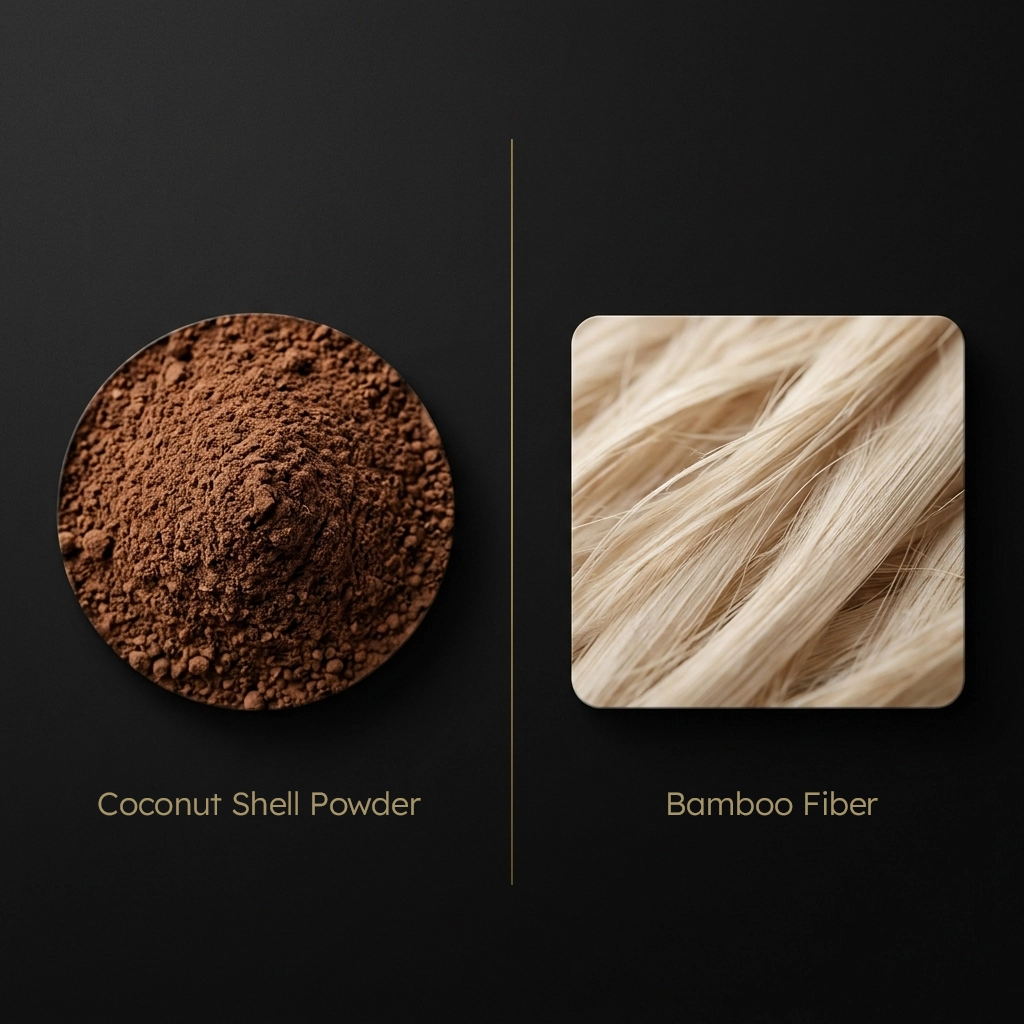
Coconut shell powder and bamboo fiber are both agricultural processing byproducts. Neither is grown as a primary crop for Agropak's production. Coconut shells are a residue from coconut processing; bamboo fiber comes from processing waste.
The two materials are combined in formulation and compression molded at controlled temperature and pressure. The result is a rigid, consistent form that holds its shape under filling-line conditions, standard shelf storage, and normal handling.
Material Properties
What each input contributes.
Four distinct inputs. Each one is load-bearing — remove any one of them and the jar either fails mechanically, shifts colour, or loses formulation safety.
Coconut shell powder contributes the structural density and rigidity of the composite. The natural texture visible on the jar surface comes from the shell particle matrix.
Bamboo fiber reinforces the composite matrix. The fiber structure adds tensile properties that work alongside the coconut shell density, producing a composite that holds form under filling-line and handling conditions.
The inner surface of the jar has a cosmetic-grade barrier coating. This is a transparent layer that prevents direct contact between the bio-composite substrate and the formulation fill. Standard in all jars evaluated by brands.
Controlled temperature and pressure form the composite into jar geometry. Compression molding produces consistent wall thickness and thread dimensions across the production run. Process validated through structured internal testing.
Independent Testing
Performance results. Verified by independent labs.
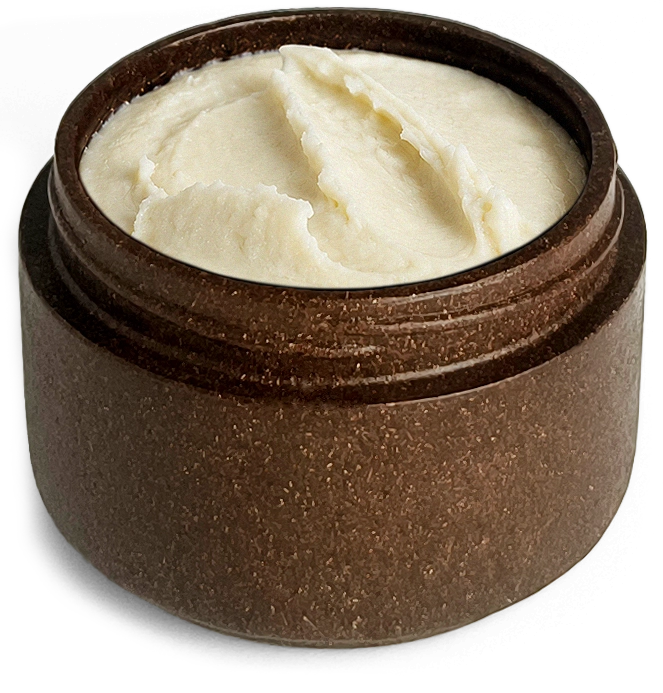
Mechanical testing was conducted at CIPET, Bengaluru (May 2026). Bio-based carbon content was verified by TÜV SÜD, Frankfurt (May 2026).
CIPET Mechanical Testing — May 2026
| Test | Result |
|---|---|
| Compression strength | 15,492 N |
| Drop resistance (0.8m concrete) | Passed |
| Testing lab | CIPET, Bengaluru |
| Test date | May 2026 |
TÜV SÜD Bio-Based Verification — May 2026
| Test | Result |
|---|---|
| Bio-based carbon content | 93% |
| Test method | ASTM D6866 (radiocarbon isotope analysis) |
| Test duration | 10 hours |
| Testing lab | TÜV SÜD, Frankfurt |
| Test date | May 2026 |
What 93% Means
ASTM D6866: a radiocarbon isotope test, not a claim.
Bio-based content is measured by ASTM D6866, a method based on radiocarbon isotope analysis. Living plants absorb atmospheric carbon-14; fossil-derived materials (petroleum plastics) contain no carbon-14. The ratio of carbon-14 to carbon-12 in the sample gives the bio-based content percentage.
TÜV SÜD conducted this test on Agropak's material in Frankfurt, over 10 hours. The result: 93% bio-based carbon content. The remaining 7% is attributable to the barrier coating and minor processing components.
Bio-based content is not the same as biodegradable or compostable. Agropak makes no biodegradability or compostability claims that are not supported by a test.
Formulation Compatibility
Formulation compatibility. Results observed.
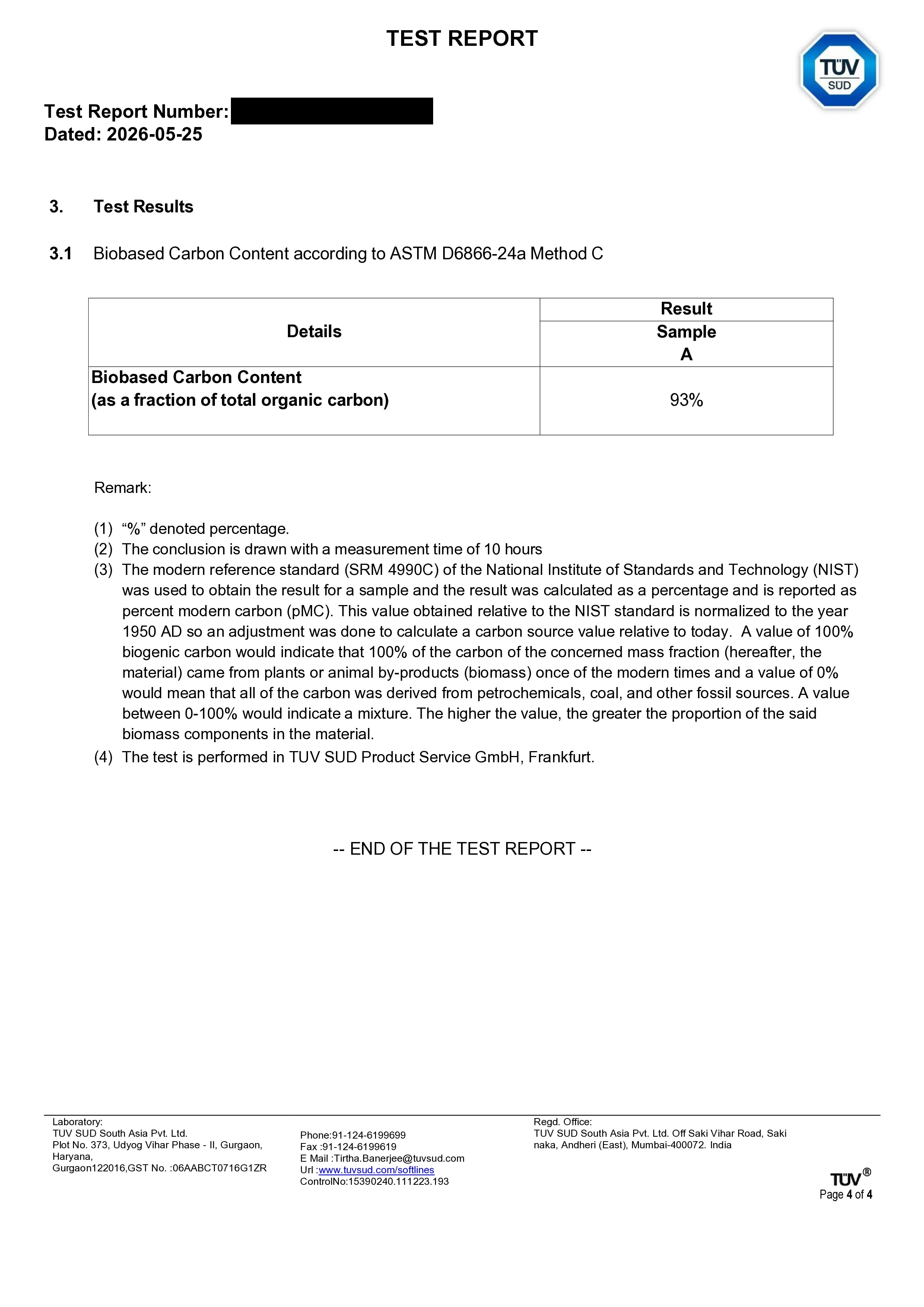
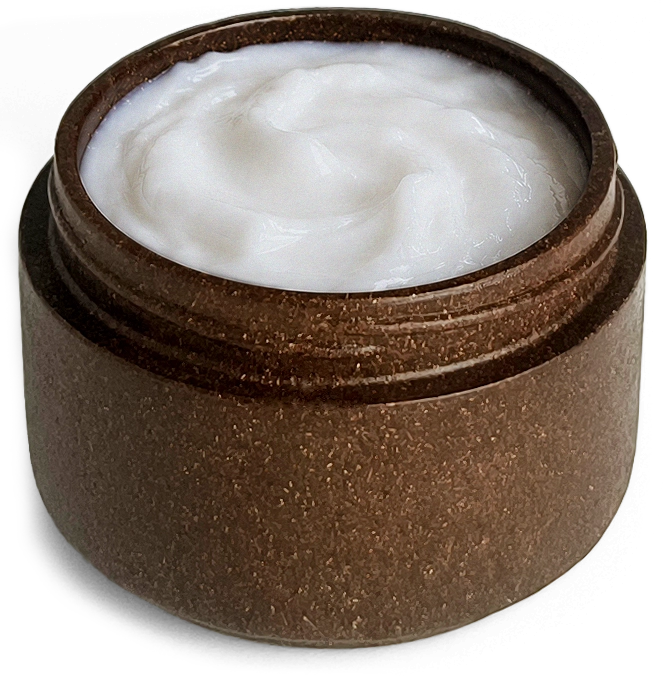
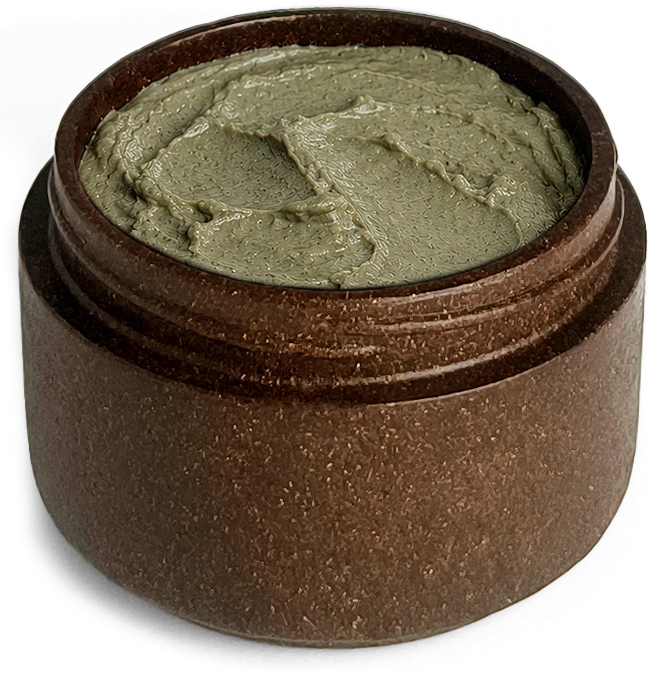
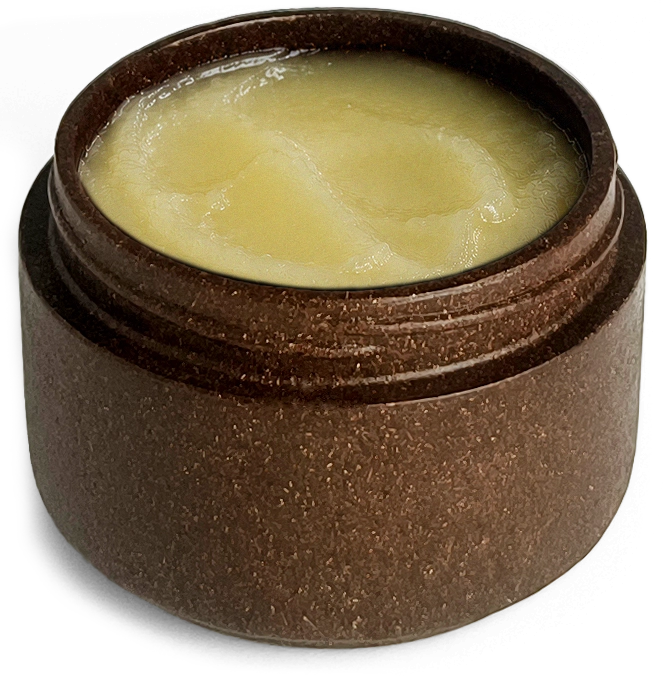
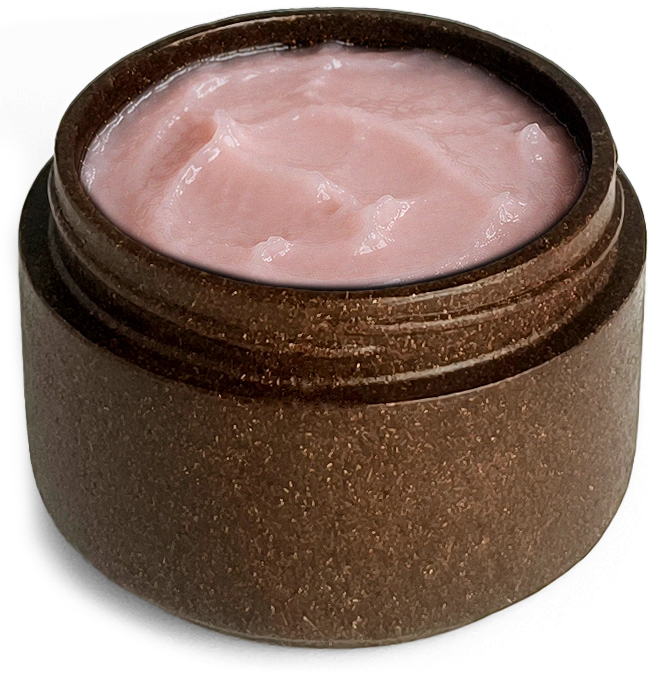
Before making the jar available for brand evaluation, Agropak conducted an internal formulation compatibility study. A range of cream formulations were placed in the jar, sealed, stored under standard conditions, and assessed over an extended period.
This is internal testing. Independent formulation compatibility certification is not yet complete. Brands with specific formulation concerns should contact us before requesting a sample.
Agropak testing disclosure — internal study, June 2026
Shelf Life
Two years. No degradation observed.
Shelf life validation was conducted under standard cosmetic packaging storage conditions. At the 2-year mark, no observable degradation in material structure, surface finish, or lid closure function was recorded.
Shelf life under high-UV or high-humidity conditions is part of ongoing evaluation. Results from extended testing will be published as they are completed.
Full Specifications
Complete dimensional and physical data.
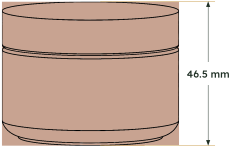
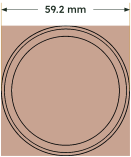
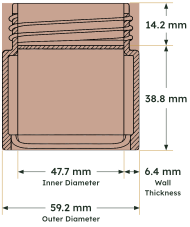
| Parameter | Value / Result |
|---|---|
| Volume | 50 ml |
| Outer diameter (jar body) | 63 mm |
| Height (jar body, without lid) | 44 mm |
| Neck thread diameter | 42 mm |
| Wall thickness | 2.5 – 3 mm |
| Base thickness | 4 mm (nominal) |
| Lid | Screw-thread, bio-composite, same material as jar |
| Liner insert | Included standard |
| Inner surface treatment | Cosmetic-grade barrier coating, transparent |
| Primary materials | Coconut shell powder, bamboo fiber |
| Manufacturing process | Compression molding |
| Bio-based carbon content | 93% TÜV SÜD, ASTM D6866 — May 2026 |
| Compression strength | 15,492 N CIPET Bengaluru — May 2026 |
| Drop resistance | Passed 0.8m concrete drop test CIPET Bengaluru — May 2026 |
| Formulation compatibility | Multiple cream formulations tested — no degradation observed Internal study — Agropak, 2025–2026 |
| Shelf life validated | 2 years (no degradation observed) |
| Colourways | Noir Black, Mocha Brown, Sandstone |
| Colourway source | Natural material variation, no added dyes |
| Manufacturing location | Bengaluru, Karnataka, India |
Agropak Technical Data Sheet — PDF
Dimensional specifications, physical properties, compression and drop test results, bio-based carbon content — all figures reference the original CIPET and TÜV SÜD test reports.
Evaluate the material
The data is on this page.
The jar has to be in your hands.
Request an evaluation kit. Three jars, one per colourway, with the technical specification sheet. Fill it with your formulation. Run it through your process.