Material comparison
Agropak bio-composite vs. PLA and bioplastic cosmetic packaging.
PLA (polylactic acid) and bio-based polymers are marketed as sustainable alternatives to conventional plastic. The reality is more specific: PLA has known heat limits, composting infrastructure dependencies, and greenwashing risk that brands evaluating it need to understand before switching.
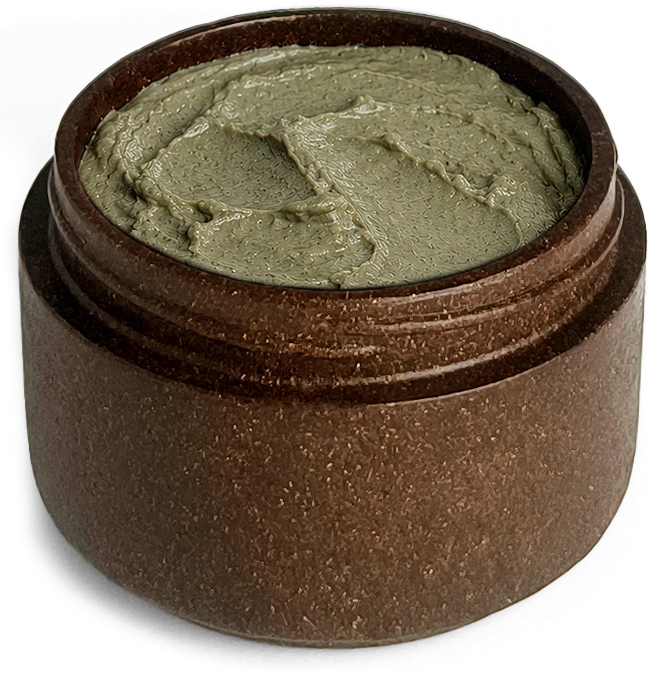
Subject of comparison
Agropak 50ml jar.
Bio-composite.
93%
Bio-based content
TÜV SÜD · ASTM D6866
15,492
Compression strength
CIPET Bengaluru · May 2026
0%
Petroleum plastic
Coconut shell & bamboo
| Property | Agropak bio-composite | PLA / Bio-polymers (polylactic acid and similar bio-based plastics) |
|---|---|---|
| Bio-based content | 93%ASTM D6866, TÜV SÜD verified May 2026 | Typically 70–100% bio-based depending on formulationPLA is derived from corn starch or sugarcane. Bio-based content varies by grade. |
| Raw material | Coconut shell + bamboo fiberAgricultural co-products — no food crop diversion | Corn starch or sugarcane — food crops with land use and water input implications |
| Heat resistance | No known deformation limit in standard cosmetic storage conditions | PLA deforms above 55–60°C. Problematic for products stored in hot climates, near heat sources, or in transit through hot warehouses. Standard cosmetic fill temperatures can exceed this limit. |
| End-of-life claim | No petroleum plastic content. Disposal pathway depends on local waste infrastructure and coating treatment. No compostable claim made. | Industrially compostable, not home compostable. Requires sustained temperatures above 58°C and specific microbial conditions. In standard landfill, PLA behaves similarly to conventional plastic. |
| Greenwashing risk | Low. All claims cite specific report numbers. No biodegradable or compostable claim is made. Assessments in progress are stated as such. | High if marketed as biodegradable without qualification. Regulators in the EU and UK have specifically targeted PLA compostability claims made without disclosure of industrial composting requirement. |
| Mechanical strength | 15,492 N compression strength. Passed 0.8m concrete drop test.CIPET, Bengaluru — May 2026 | PLA is more brittle than equivalent-thickness conventional plastic. Impact resistance is lower than HDPE or PP at similar wall thickness. |
| Surface finish | Natural matte with organic grain texture | Can be moulded to smooth or textured finishes; looks more like conventional plastic unless intentionally designed otherwise |
| Formulation compatibility | Confirmed across common skincare formulation categories including face creams, body butters, and gel creamsInternal compatibility study; independent certification assessment in progress | Generally compatible, but moisture absorption can be higher than conventional plastic. Long-term data for cosmetic formulations is less established than for conventional packaging. |
| Independent certification | Bio-based content: TÜV SÜD verified May 2026 (ASTM D6866). Mechanical: CIPET May 2026. | Compostability: EN 13432 or ASTM D6400. Bio-based content: same ASTM D6866 standard. Certification varies by supplier and grade. |
PLA is a legitimate material with legitimate use cases. The issue is when it is described as biodegradable without the qualification that industrial composting infrastructure is required — infrastructure that does not exist in most urban markets. A claim that requires infrastructure the consumer doesn't have is not a claim the consumer can act on.— Payal Patel, Founder, Agropak
Common questions when evaluating PLA vs bio-composite
Is PLA cosmetic packaging actually biodegradable?
PLA is certified as industrially compostable under EN 13432 or ASTM D6400 — not biodegradable in the general sense. Industrial composting requires sustained temperatures above 58°C and specific microbial conditions that are only available at dedicated composting facilities. In a home compost bin, garden, or standard landfill, PLA behaves similarly to conventional plastic and does not break down within any practically useful timeframe. Marketing PLA as biodegradable without this qualification is increasingly treated as a greenwashing claim under EU and UK consumer protection regulations.
Can my brand make a compostable claim if we use PLA packaging?
A compostable claim is defensible only if the composting infrastructure exists where your product is sold and used — and only if the claim discloses the composting conditions required. In most retail markets, industrial composting facilities are not accessible to consumers. A "compostable" claim that requires industrial infrastructure the end user cannot access is not a claim they can actually act on, and regulators are treating this as misleading. Legal advice is recommended before making this claim in any market.
What happens to PLA in a hot climate or hot warehouse?
PLA begins to deform at approximately 55–60°C. In markets with high ambient temperatures, or in products stored near heat sources, or during transit through hot logistics environments (common in India and Southeast Asia), PLA packaging can warp or distort before it reaches the consumer. This is a real operational risk that most PLA product specs understate.
Also compare
Further reading
Evaluate the material
Evaluate the bio-composite alternative.
Evaluation samples typically dispatched within a few working days. Sample kits are ₹299 + shipping charges. No commercial commitment required to get a jar in hand.