Europe — Green Claims Directive
Your ingredient story and your packaging need to tell the same story.
Ships direct from India via DHL · Shipping cost confirmed before payment
What's changed in European markets
European buyers — from department stores in Milan to online platforms in Amsterdam — are no longer accepting brand-declared sustainability claims at face value. They want the certificate, the origin statement, the third-party verification.
The Green Claims Directive is formalising what leading buyers already demand. The evidence base that satisfies a sophisticated retail buyer today is the same one that satisfies a compliance review tomorrow.
Where material origin becomes a product feature
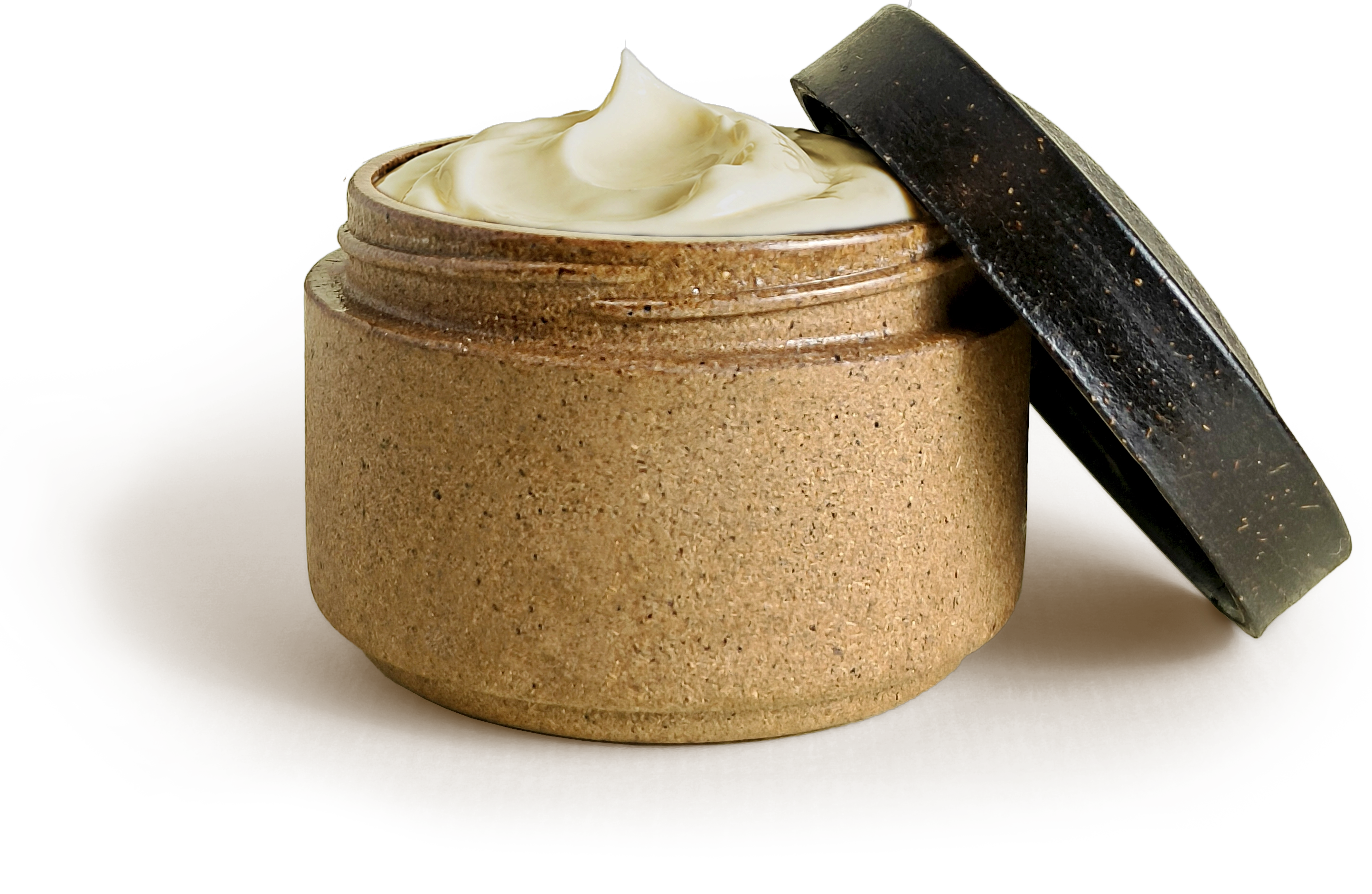
Coconut shell powder and bamboo fiber — the same raw material philosophy that drives ingredient sourcing in the European natural beauty category — applied to the jar itself.
No synthetic polymer. Colours that emerge from the material. A provenance story that runs from raw material to finished jar — documented, third-party verified, and available in your sample kit.
Three directives, one material decision
PPWR, ESPR, and Green Claims are moving simultaneously. What your packaging is made of affects all three.
All EU packaging must be recyclable by 2030. Bio-composite sits in a different material classification band to plastic. Your compliance advisor determines the correct pathway using Agropak's material composition declaration — one document, clear starting point.
Environmental claims must be independently verified. TÜV SÜD Frankfurt's 93% bio-based certification under ASTM D6866 is exactly that: third-party verification of a specific, measurable property — not a brand headline. It travels with every Agropak jar.
ESPR requires durable, repairable, and recyclable products. Agropak's bio-composite passes a 15,492 N compression test and a 0.8 m drop test. The material data is in your evaluation kit — for retailer onboarding, buyer questionnaires, and internal product review.
The European beauty market is moving from claiming sustainability to proving it. Ingredient transparency, material provenance, and third-party certification are becoming what buyers expect — not what they celebrate.
Italian beauty retail at the premium tier has long led on ingredient storytelling. The shift now is that the packaging is expected to have the same traceability as the formula. Material origin, not just design, is entering the editorial conversation.
Dutch retailers and platforms are among Europe's most rigorous on supplier documentation. Agropak's documentation package — material declaration, TÜV SÜD certificate, CIPET reports — is structured to meet these questionnaires directly.
Where the material comes from
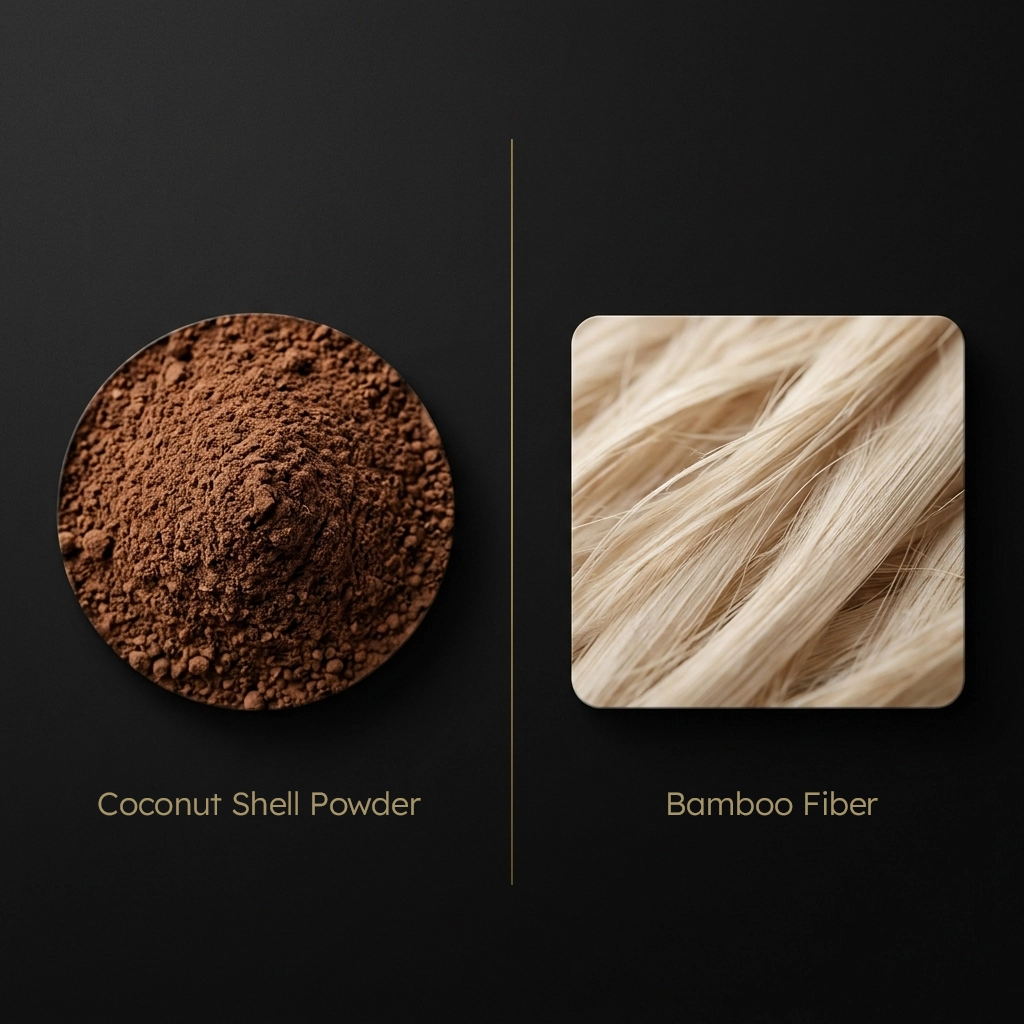
Coconut shell and bamboo fiber. Traceable to origin.
Coconut shell powder
Agricultural byproduct from coconut processing. The shell that would otherwise be discarded becomes a structural material. Origin traceable to South Indian processing supply chains.
Bamboo fiber
Fast-growing, no irrigation required, no replanting after harvest. The fiber contributes to structural integrity. Combined with coconut shell powder, the result is 93% bio-based by carbon content.
TÜV SÜD verification
93% bio-based carbon content measured by ASTM D6866 isotopic analysis. Certified by TÜV SÜD Frankfurt, May 2026. The certificate travels with every Agropak jar — available in your evaluation kit.
The 7% explained
The remaining 7% is a mineral binder — not petroleum-derived plastic. The jar contains no synthetic polymer. Your material declaration confirms this explicitly.
Product specifications
Proven at lab grade. Ready for European retail.
| Volume | 50 ml |
| Compression strength | 15,492 NCIPET, Bengaluru — May 2026 |
| Drop test | Passed 0.8 m concrete drop |
| Bio-based content | 93%TÜV SÜD — ASTM D6866 — May 2026 |
| Petroleum-derived plastic | None |
| Shelf life | 2 years validated |
| Interior coating | Transparent barrier coat |
| Colourways | Noir Black, Mocha Brown, Sandstone |
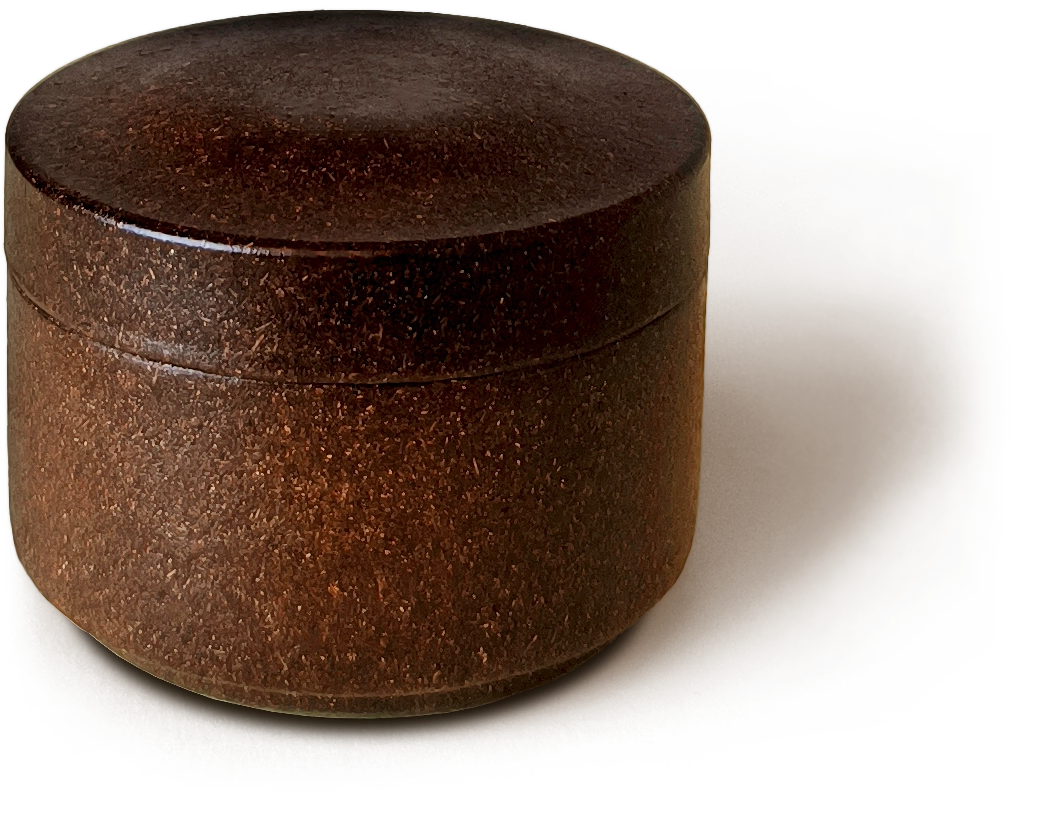
Face cream, body butter, balm, gel cream, sunscreen, night cream. No leaching, no discolouration observed across tested categories. See compatibility →
Lid form, embossing, label positioning, colourway selection. Available for evaluation before commercial quantities. Customization →
Common questions
From European beauty brands and sustainability teams.
Does the Agropak jar qualify as recyclable under EU PPWR?
PPWR mandates recyclability for all EU packaging by 2030. Bio-composite does not follow a conventional plastic or paper recycling stream. Agropak provides full material composition documentation so your compliance advisor can determine the correct classification and pathway. The answer is not a brand claim — it's a regulatory assessment your advisor makes with the evidence Agropak provides.
How does the 93% bio-based figure hold up under Green Claims Directive scrutiny?
The Green Claims Directive requires environmental claims to be independently verified. Agropak's 93% bio-based content is certified by TÜV SÜD Frankfurt under ASTM D6866 isotopic analysis — a laboratory measurement, not a brand estimate. The certificate is issued by a third party and travels with every jar. What 93% bio-based means →
What provenance documentation is available for European retailers and buyers?
Material composition declaration, TÜV SÜD bio-based certificate, CIPET structural test reports (15,492 N compression, 0.8 m drop test), and a raw material origin statement. The package is structured for buyer questionnaires, retailer onboarding, and Green Claims substantiation. Full testing data →
How do we start an evaluation from Europe?
Email info@agropak.in or schedule a call. Evaluation kits ship to Europe — one jar per colourway with the full documentation package. No commercial commitment at any stage.
Related reading
For European brands building a verified sustainability position.
How ASTM D6866 works, what TÜV SÜD measures, and why this matters for Green Claims compliance — not just marketing.
The three terms European buyers use interchangeably — and why each means something very different for compliance and claims.
Weight, transport carbon, breakage, and provenance — a structured comparison for brands currently using glass in European markets.
A framework for building the internal case for a packaging switch — including the documentation trail European compliance teams need to review.
Evaluate the material
The data is on this page.
The jar has to be in your hands.
Evaluation kits shipped to Europe. TÜV SÜD certificate, CIPET reports, material declaration, raw material origin statement, and spec sheet included. No commercial commitment required.
Shipping cost confirmed when we reach out — before anything is charged. Kits have reached brands across Europe.