United Kingdom — Plastic Packaging Tax
The PPT charges £228.82 per tonne on plastic. This jar contains none.
Ships direct from India via DHL · Shipping cost confirmed before payment
Where many brands are right now
You're tracking recycled content percentages, managing supplier certificates, and watching a 2027 deadline — when factory scrap stops qualifying.
Post-consumer recycled plastic at the quality needed for cosmetics is in constrained supply and commands a significant premium. The deadline is fixed. The supply chain pressure is real.
A structurally different position
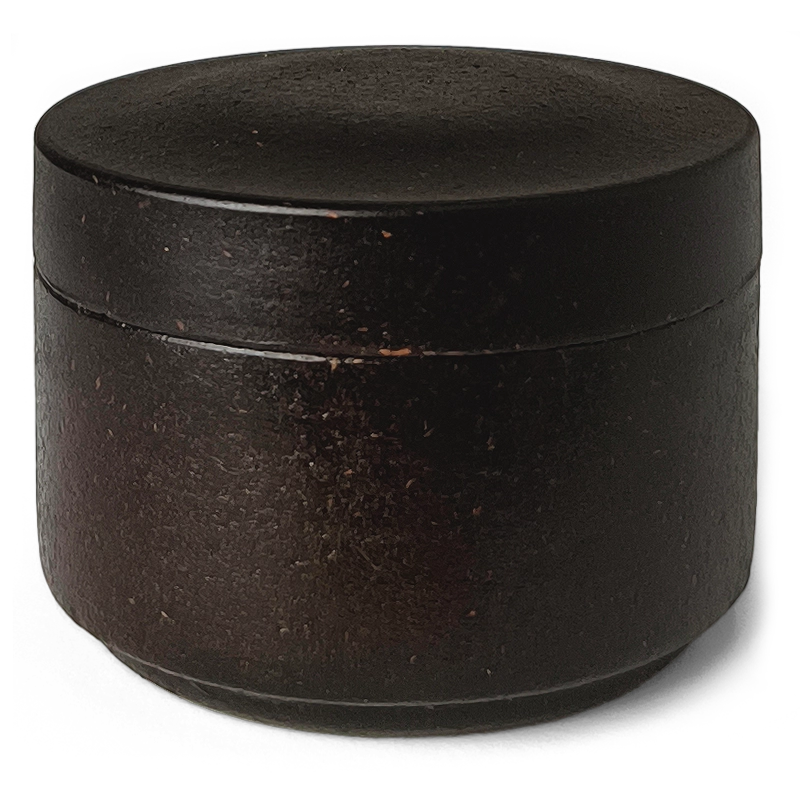
This jar doesn't manage recycled content. It has no petroleum-derived plastic to begin with — coconut shell powder and bamboo fiber, no synthetic polymer.
Whether it sits outside the PPT's legal definition of plastic packaging is a position your tax advisor reaches using Agropak's third-party documentation — not a marketing claim.
Three frameworks, one material decision
PPT, EPR, and the 2027 rule change are moving simultaneously. What you're made of affects all three.
£228.82/tonne on plastic with less than 30% recycled content. From 2027, factory offcuts no longer qualify. Bio-composite sits outside the plastic material category — a different starting point to managing percentages under deadline pressure.
EPR fees are eco-modulated by material type. Bio-composite sits in a different classification band to standard plastics. Your EPR advisor completes the band assessment using Agropak's material declaration — one document serves both frameworks.
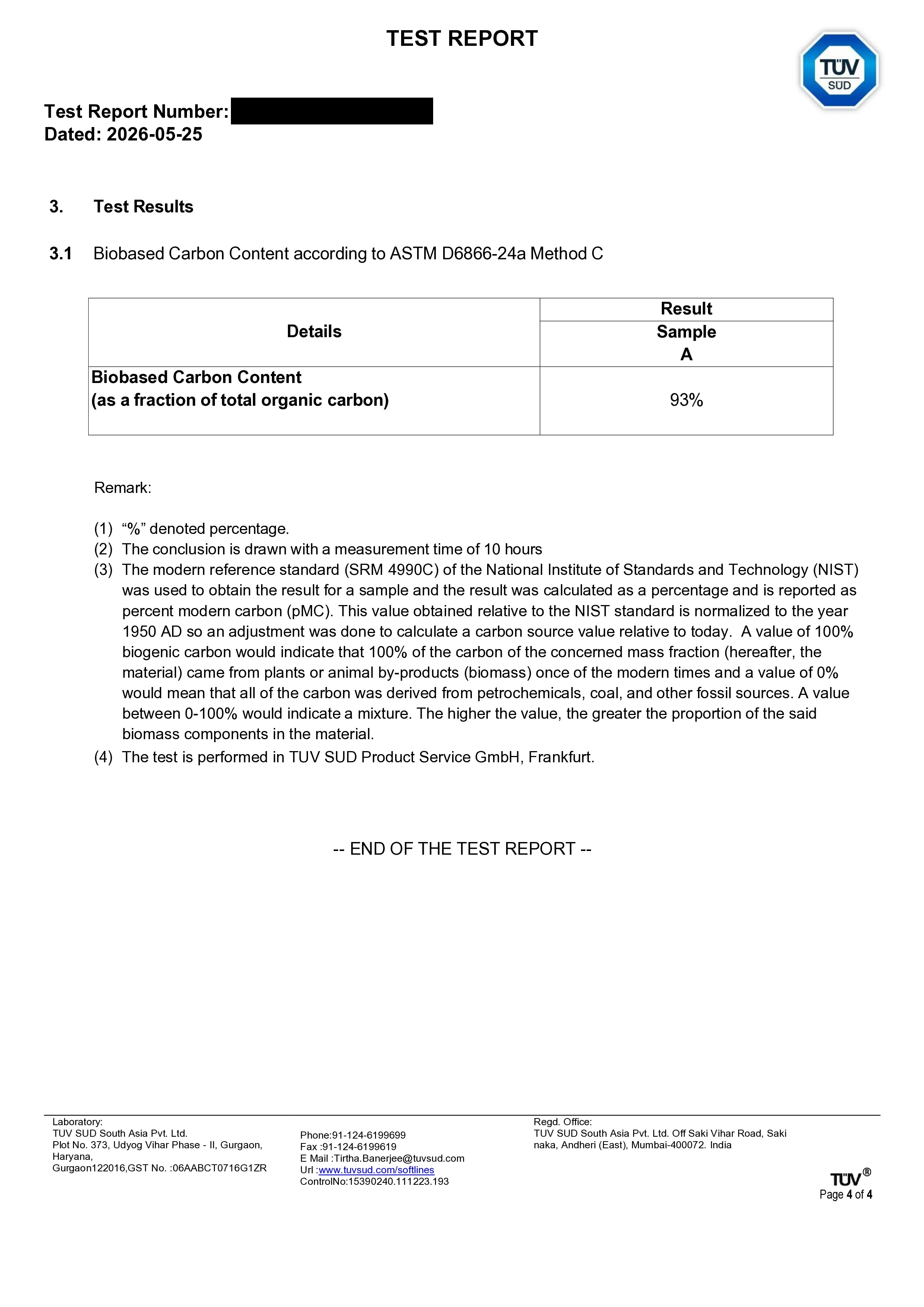
Material composition declaration, TÜV SÜD bio-based certificate (93%, ASTM D6866, Frankfurt May 2026), and CIPET structural reports. Third-party verified — the evidence base for HMRC compliance review, EPR assessment, and product safety files.
From 2027, pre-consumer waste — factory offcuts, production scrap — will no longer count toward the 30% threshold. Packaging currently passing PPT via pre-consumer sources becomes taxable. Supply chain changes take 12–24 months to bed in. The deadline doesn't move.
High-quality post-consumer recycled plastic at cosmetic grade is in tight supply and carries a meaningful price premium. Brands currently comfortable with recycled content numbers need to find a new path before the 2027 cutoff, not at it.
Switching from petroleum plastic to bio-composite isn't a recycled-content reformulation — it's a material category change. That changes the nature of the compliance question entirely, not just the number you're managing against a deadline.
The documentation package
Everything your HMRC compliance review needs.
Material composition declaration
Confirms no petroleum-derived plastic, no synthetic polymer. Primary components: coconut shell powder and bamboo fiber. For PPT advisor and EPR band assessment.
TÜV SÜD bio-based certificate
93% bio-based carbon content. ASTM D6866 isotopic analysis. Frankfurt, May 2026. Internationally recognised — not a self-declared brand figure.
CIPET structural test reports
15,492 N compression. 0.8 m drop test passed. 2-year shelf life validated. Government-accredited packaging test institute — third-party structural data for your product safety file.
Full specification sheet
Dimensions, wall thickness, barrier coat spec, formulation compatibility categories. Included with every evaluation kit.
Product specifications
Built for cosmetic-grade performance.
| Volume | 50 ml |
| Compression strength | 15,492 NCIPET, Bengaluru — May 2026 |
| Drop test | Passed 0.8 m concrete drop |
| Bio-based content | 93%TÜV SÜD — ASTM D6866 — May 2026 |
| Petroleum-derived plastic | None |
| Shelf life | 2 years validated |
| Interior coating | Transparent barrier coat |
| Colourways | Noir Black, Mocha Brown, Sandstone |
Noir Black, Mocha Brown, and Sandstone emerge from the material itself. No synthetic pigments — nothing that contradicts your ingredient transparency story.
Face cream, body butter, balm, gel cream, sunscreen, night cream. See compatibility →
Common questions
From UK beauty brands and compliance teams.
Is the Agropak jar subject to the UK Plastic Packaging Tax?
The PPT applies to packaging made wholly or predominantly from plastic with less than 30% recycled content. Agropak's jar contains no petroleum-derived plastic. Whether it sits outside the PPT's legal definition entirely is an assessment your tax advisor makes using Agropak's third-party material documentation — not a marketing claim. What 93% bio-based means →
What changes in 2027, and how does it affect current positions?
Pre-consumer waste — factory offcuts, production scrap — will no longer count toward the 30% threshold. Packaging currently meeting the threshold via pre-consumer sources becomes taxable. High-quality post-consumer recycled plastic for cosmetics is in constrained supply. Brands should model their 2027 position now, not at the deadline.
What documentation does Agropak provide for a compliance review?
Material composition declaration (no petroleum-derived plastic), TÜV SÜD bio-based certificate (93%, ASTM D6866, Frankfurt May 2026), and CIPET structural reports (15,492 N compression, 0.8 m drop test). All third-party verified. Full testing data →
What is the evaluation process from the UK?
Email info@agropak.in or schedule a call. Evaluation kits ship to the UK — one jar per colourway with the full documentation package. No commercial commitment at any stage.
Related reading
For UK brands doing their packaging homework.
How ASTM D6866 isotopic analysis works and why it matters for your HMRC documentation — not just a percentage on a label.
Material-by-material comparison: weight, structural performance, and compliance implications for UK brands.
A structured framework for testing new materials and building the internal case for a switch before a compliance deadline.
How the PPT applies to cosmetic packaging, what the 30% recycled content threshold means in practice, and why bio-composite sits outside it.
Evaluate the material
The data is on this page.
The jar has to be in your hands.
Evaluation kits shipped to UK brands. TÜV SÜD certificate, CIPET reports, material declaration, and spec sheet included. No commitment required.
Shipping cost confirmed when we reach out — before anything is charged. Kits have reached brands in the UK and Europe.