India — Bio-Composite. Zero Plastic.
India's bio-composite cosmetic packaging manufacturer.
The situation
Indian beauty brands are growing fast. The packaging supply chain is the weak link.
India's beauty and personal care market is one of the fastest-growing in Asia. D2C brands built on premium ingredients, Ayurvedic heritage, and digital distribution are scaling quickly — and increasingly looking at export to the UK, EU, Singapore, and the Gulf as a natural next step.
The packaging supply chain has not kept pace. Most Indian brands use plastic jars from domestic moulders — functional, cost-effective, and a growing liability as both domestic EPR obligations tighten and international export buyers request material documentation that plastic packaging cannot easily provide.
The answer
Made in India. Tested to international standards. Documentation ready for export.
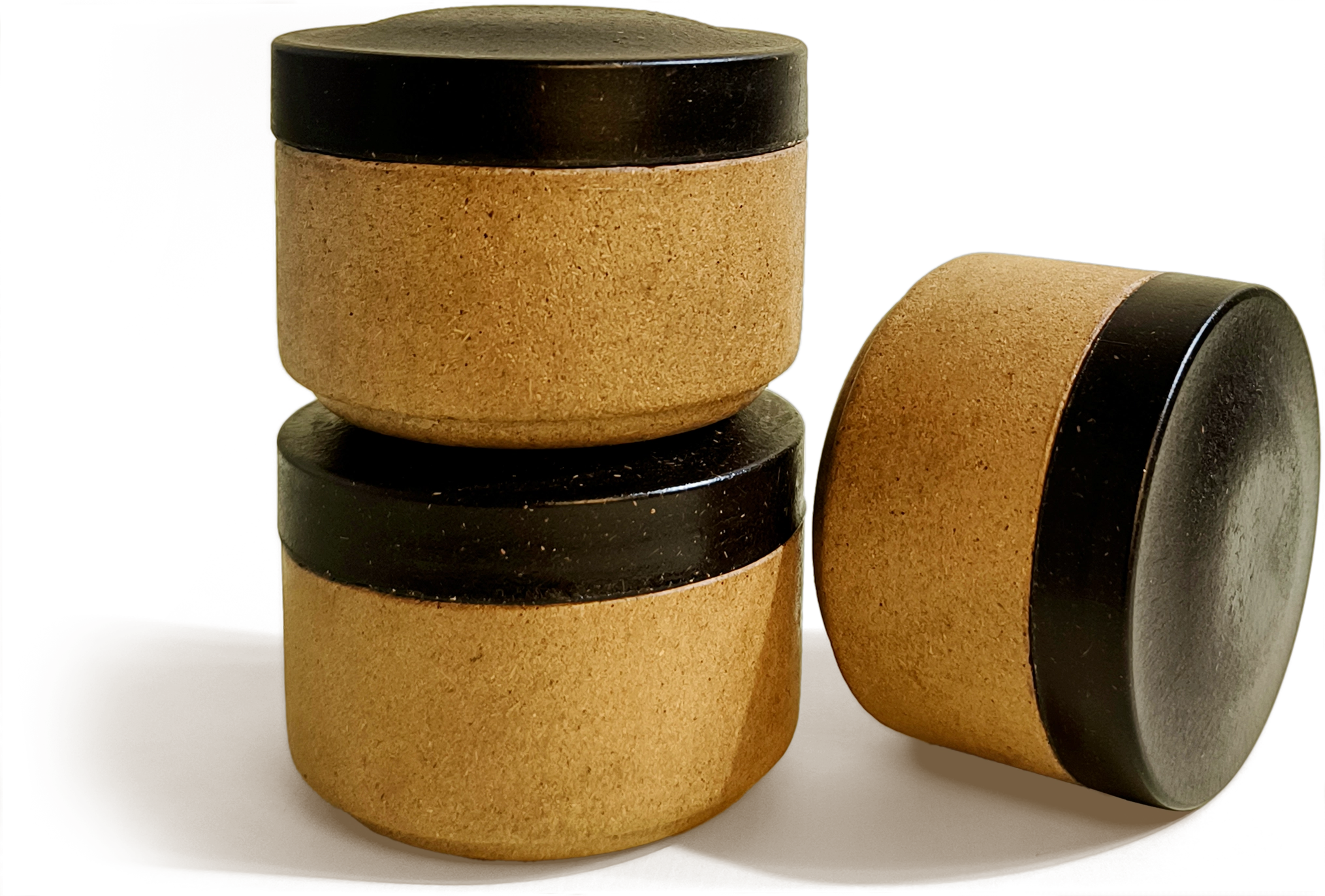
Agropak manufactures bio-composite cosmetic jars from coconut shell powder and bamboo fiber — South Indian agricultural co-products. The jar and lid contain no petroleum-derived plastic. The 93% bio-based content is verified by TÜV SÜD Frankfurt (ASTM D6866). Structural testing was conducted at CIPET Bengaluru — a government-affiliated testing institute.
The documentation package — material composition declaration, TÜV SÜD certificate, CIPET test reports — is accepted by buyers in the EU, UK, Singapore, GCC, Japan, and South Korea. For Indian brands building export distribution, this is packaging that doesn't need to be re-qualified for each new market.
Why this matters for Indian brands
Four things that change when you switch from plastic to bio-composite.
India's Plastic Waste Management Rules impose Extended Producer Responsibility on brands using plastic packaging. Bio-composite packaging containing no petroleum-derived plastic sits in a different EPR classification category. Your compliance consultant uses Agropak's material composition declaration to determine the correct reporting position — it is their assessment, not Agropak's, but the documentation makes it possible.
Indian brands exporting to the EU need PPWR-compliant packaging documentation. Brands exporting to the UK need material data for UK Plastic Packaging Tax assessment. Japan and Korea buyers ask for TÜV SÜD or equivalent bio-based certificates. Agropak provides all of this with the kit — one document package that works across every export market your brand enters.
Coconut shell from South India. Bamboo fiber from sustainable cultivation. 93% bio-based carbon content, verified by radiocarbon isotopic analysis under ASTM D6866. These are not marketing claims — they are independently verified material facts. For a brand built on ingredient transparency, the packaging now has the same standard of evidence as the formulation.
Many Indian brands importing glass jars with plastic lids from China carry currency risk, 6-8 week lead times, and minimum container quantities. Agropak manufactures in Bengaluru. Domestic freight, GST invoicing, rupee pricing, and lead times measured in days. If that supply chain needs to flex, it's a phone call — not an international logistics negotiation.
The raw materials are coconut shell and bamboo fiber — agricultural co-products from South Indian farming. The same coconuts that produce oil, water, and coir. The same bamboo that India has grown for centuries. There is no virgin forest material in this jar. No petroleum. No food crop diverted to packaging. The starting point is agricultural waste. The end point is a jar with a 93% bio-based content certificate from TÜV SÜD.
Agropak — on material provenance
Product specifications
The 50ml jar — what Indian brands are evaluating.
| Volume | 50 ml |
| Outer diameter | 63 mm |
| Height (jar) | 44 mm |
| Neck diameter | 42 mm |
| Wall thickness | 2.5 – 3 mm |
| Base thickness | 4 mm |
| Compression strength | 15,492 N CIPET, Bengaluru — May 2026 |
| Drop test | Passed 0.8 m concrete drop CIPET, Bengaluru — May 2026 |
| Shelf life | 2 years Internal validation — May 2026 |
| Bio-based content | 93% TÜV SÜD, Frankfurt — May 2026 |
| Colourways | Noir Black · Mocha Brown · Sandstone |
Face cream, body butter, balm, gel cream, sunscreen SPF 30+, night cream, hair mask. Internal compatibility study completed. Results available during formal evaluation.
Domestic freight to Mumbai, Delhi, Chennai, Hyderabad, Pune, and Kolkata through standard courier networks. No import duty, no customs clearance, no container minimums. Export orders ship via DHL.
Material composition declaration, TÜV SÜD bio-based content certificate, CIPET structural test reports. Provided with evaluation kits and commercial orders. Accepted by buyers in EU, UK, Singapore, GCC, Japan, and Korea.
Common questions
From Indian beauty brands evaluating plastic-free packaging.
The first step is a sample.
Evaluation samples dispatched within 2 working days from Bengaluru. Sample pricing and shipping charges apply. No commercial commitment required.
Or email: [email protected] / WhatsApp: +91 70199 25623