Material comparison
Agropak bio-composite vs. glass cosmetic packaging.
Glass is the default premium alternative to plastic. But glass jars still depend on plastic lids — and glass has real fragility, weight, and cold-chain constraints most brands underestimate. This is the honest side-by-side.
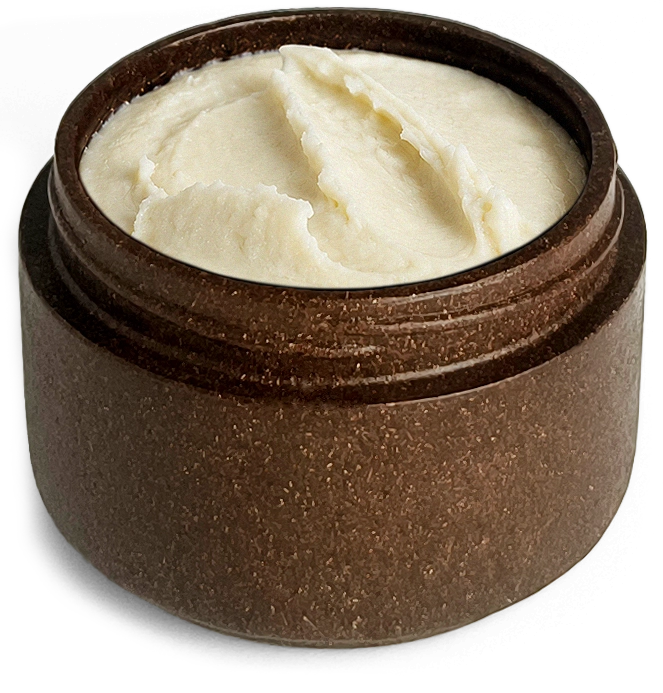
Subject of comparison
Agropak 50ml jar.
Bio-composite.
| Property | Agropak bio-composite | Glass cosmetic jar (typical borosilicate or soda-lime) |
|---|---|---|
| Bio-based content | 93%ASTM D6866, TÜV SÜD verified May 2026 | 0% (mineral-derived, non-renewable silica feedstock) |
| Primary raw material | Coconut shell + bamboo fiberAgricultural co-products. No virgin fossil material. | Silica sand, soda ash, limestone — high-temperature mineral processing |
| Plastic in construction | NoneJar and lid are the same bio-composite material | Glass jar body, but standard cosmetic glass jars use a plastic liner or plastic lid — the lid is typically PP or ABS |
| 100% plastic-free | Yes | No — most glass cosmetic jar formats include a plastic component in the lid or liner |
| Fragility | Compression-molded bio-composite — no shattering riskPassed 0.8m concrete drop test. CIPET May 2026. | Glass shatters on impact. Requires protective secondary packaging for shipping. Higher damage rate in logistics. |
| Compression strength | 15,492 NAxial compression test. CIPET, Bengaluru — May 2026. | Varies; glass is brittle under side impact even when strong under axial load. Does not provide a direct comparison figure. |
| Weight | Lighter than glass (bio-composite density is lower than glass) | Glass is significantly heavier than equivalent volume plastic or bio-composite. Higher logistics cost per unit. |
| Surface finish | Natural matte with fine grain texture; earthy and material-expressive | Optically clear or opaque; cold and mineral; consistent per batch |
| Sustainability claim basis | 93% bio-based carbon content verified by TÜV SÜD. No petroleum plastic. Independent test report referenced. | Glass is recyclable (in theory). But it is energy-intensive to produce and heavy to transport. Most sustainability claims for glass are end-of-life, not origin-based. |
| Manufacturing energy | Compression molding at moderate temperatures | Molten glass requires temperatures of 1,500°C+. Energy-intensive production with a significant manufacturing carbon footprint. |
| Fill line compatibility | Fits standard 50ml cosmetic jar filling equipment. 42mm neck thread. | Typically compatible with standard fill lines, but lid liner integration varies by format. |
| Formulation compatibility | Confirmed across common skincare formulation categories including face creams, body butters, and gel creamsInternal compatibility study; independent certification assessment in progress | Well-established; decades of industry data across all formulation types |
| Sample availability | Evaluation sample typically dispatched within a few working days. Sample kits are ₹299 + shipping charges. | Depends on supplier; often minimum order quantities apply |
| Commercial pricing | Inquiry-based; contact for pricing discussion | Established commodity pricing; varies by glass type, volume, and supplier |
The question for glass users is not whether glass looks premium — it does. The question is whether a jar that contains a plastic lid can be described as plastic-free. For a brand whose sustainability position is specific, the answer matters.— Payal Patel, Founder, Agropak
When to consider switching
Agropak is a strong fit if your brand currently uses glass and:
Including the lid. Agropak's jar and lid are the same material. There is no plastic component in the system.
Bio-composite does not shatter. The 0.8m concrete drop test result removes the glass breakage variable from your logistics calculation.
93% bio-based carbon content verified by TÜV SÜD is a specific, documented, auditable claim that glass cannot make.
These are the application types covered by Agropak's internal compatibility study. The data exists for your evaluation team to review.
Evaluate the material
Hold the jar next to your glass.
Evaluation samples typically dispatched within a few working days. Sample kits are ₹299 + shipping charges. No commercial commitment required.